I awoke to the sound of my cell phone’s alarm going off. I picked up my phone, and with blurry eyes, I saw that it was 4:00 a.m. As I slowly woke, I looked around the hotel room and reoriented myself. I was filled with excitement but also a huge amount of trepidation. “How do I get myself into these situations?” I thought to myself. I walked to the restroom, hopeful that I could take a dump. Emptying the bowels was essential to a successful race.
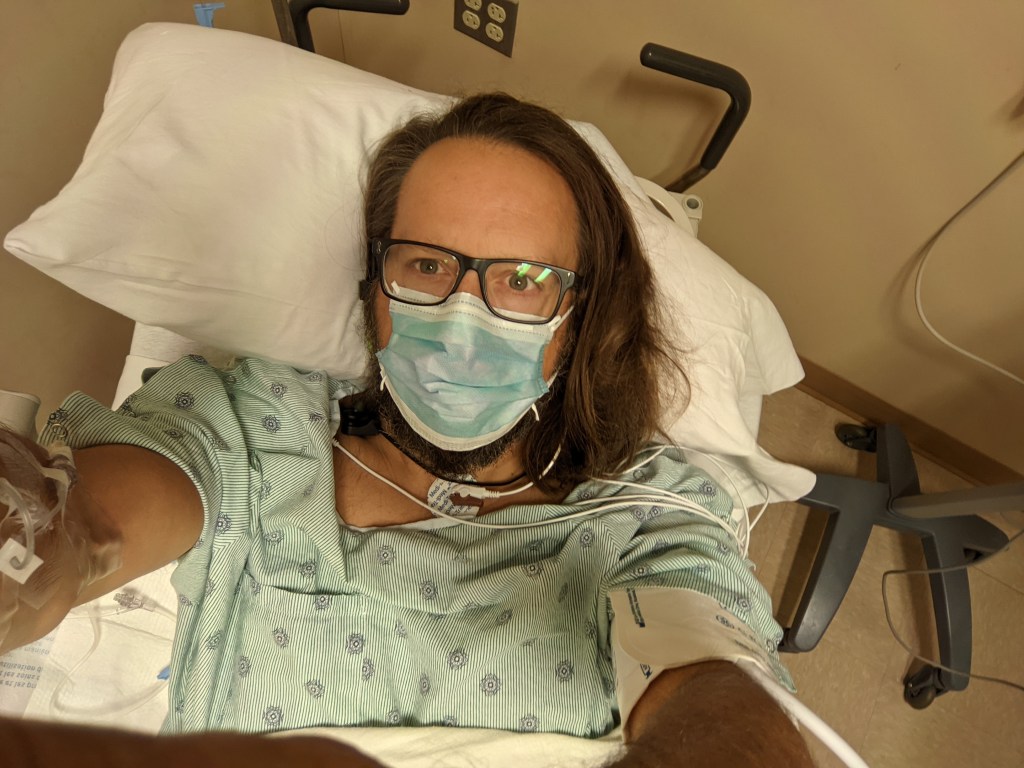
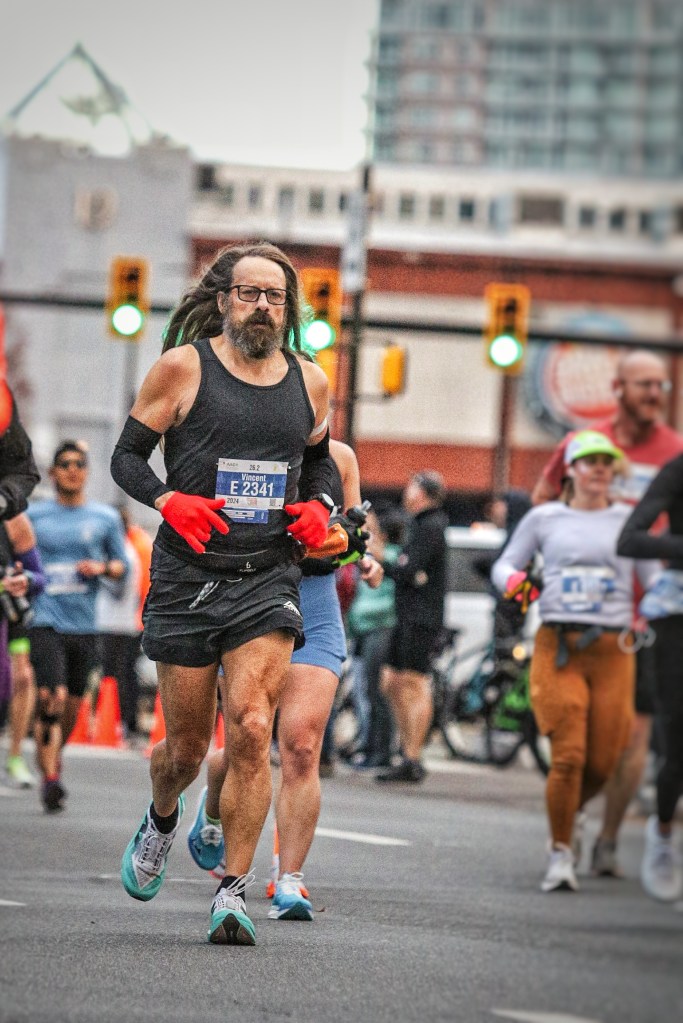
This particular morning, I was preparing to run the Rocky Raccoon 50-mile ultramarathon. I had originally planned to take a full 12 months to train for an ultramarathon. Back in November of 2024, I had just completed the Philadelphia Marathon with a fairly respectable time of 4:18 to run 26.2 miles. It was not long ago that this achievement would have been unthinkable. I did not start running until I was 48 years old. My wife took up running during the pandemic, and I followed suit mostly out of boredom; the idea of me running felt novel and even a little absurd. At the time, I did not know I had both colorectal and urothelial cancers.
During my first Bacillus Calmette-Guérin (BCG) treatment for bladder cancer, where the immunotherapy solution was pumped into my bladder through a catheter while I was wide awake, my nurse at Sibley Memorial had a picture of herself running the Rock’n’Roll Washington DC Half Marathon hanging on her office wall. “Wow,” I thought, “running 13.1 miles, that seemed impossible.” I then nervously braced for my first catheterization and bladder cancer treatment, not knowing there would be many more to come. As with most runners, it started with several 5K races, then a few 10-milers, culminating in my wife and me running a half marathon in Colorado as well as the Rock’n’Roll DC Half Marathon. The latter was inspired by my kind nurse at Sibley.
From 2020 to 2024, with many surgeries, including a right hemicolectomy for colon cancer treatment, multiple Transurethral Resection of Bladder Tumor (TURBT) surgeries, neobladder surgery where my bladder was removed and replaced with a pouch of small intestine to act as a primitive bladder, corrective surgery following four cases of sepsis due to scar tissue building up at the neobladder neck and making me unable to void, as well as immunotherapy, three types of chemotherapy, small intestinal blockages caused by scar tissue, and countless days in the hospital, I was able to keep running in between and sometimes during treatments. Often only able to do short distances, yet always staying consistent, running offered me a form of meditation. It became my therapy and my singular coping mechanism for the seemingly unending parade of horrors that cancer brought me.
In 2024, while preparing for my first full marathon, I had never run more than 16 miles. Early on, I invested in a running coach. I needed guidance because I had a tendency to jump off the couch and run five miles with no training after decades of bodily neglect. This led to multiple injuries.
My coach asked me to trust the process for marathon training, but I just could not comprehend how, having only ever run 16 miles as my longest run, I could possibly run 26.2 miles. Nervously, I stuck to my coach’s plan and ended up running what felt like a miraculous average pace of ~9:50 minutes per mile. I was astonished that my aging, formerly cancer-ridden body could do this. It had been nearly four years since my double cancer diagnosis, and after the marathon, I finally began to let myself believe that the cancer was behind me. I was now a marathoner. Along with my wife, who was my running partner and ran nearly every race with me, we promptly set our sights on a true bucket-list goal—one that I never would have imagined possible—running an ultramarathon. We signed up for the Crested Butte 50-miler in the mountains of Colorado. My coach set the training plan, which would take the better part of a year to complete.
Unfortunately, only two weeks after my Philadelphia Marathon finish, and after boldly establishing the crazy plan to run 50 miles, I received unexpected news from a urine cytology. The result read: “Suspicious for high-grade urothelial carcinoma.” I was gutted. Surgery to inspect my kidneys for cancer was promptly scheduled. I had become accustomed to dealing with the stress of cancer. While this was a major blow, after several days of darkness, I decided to rally. I texted my coach, explained the situation, and asked how soon I could be trained to simply finish a 50-mile ultramarathon. He told me I would need a minimum of 12 weeks of intense training, and with that level of intensity, the risk of injury would be high. I immediately got to work.
I started mapping out all of the ultramarathon options within my limited time window. I did not want to wait until after the kidney inspection surgery or the antegrade ureteroscopy because I knew from experience how quickly things could deteriorate. Impulsively, I wrote a quick post on the r/ultramarathon subreddit. At the time, I had been diagnosed with Stage 4 colorectal cancer, which amazingly turned out to be a false diagnosis and was ultimately discovered to be a return of my bladder cancer in the kidneys. Having only been a lurker on Reddit, I was surprised to see my post gain attention. I had outlined my cancer’s return and my bucket list goal of running an ultramarathon. Soon, I had over 100 responses from redditors suggesting incredible races across the U.S. and around the world. I was immediately blown away by the many messages of support, and after reading countless ultra stories, I thought, “Oh wow, this community really is amazing, isn’t it?” Several redditors offered to race with me or pace me. “Wow, these people are fucking awesome,” I thought again. One redditor living in San Antonio, Texas, recommended the Rocky Raccoon 50-miler.
My new Redditor friend Chris from San Antonio offered to come do the race with me. “LFG go!” I responded on the r/ultramarathon thread. The plan was set, and my race was chosen. It was going to be the Rocky Raccoon 50-miler. As ultras go, it was a beginner-friendly course with three 16.7-mile loops around a large lake in Huntsville, Texas. Each loop I would see my wife, who would be crewing me. Having zero trail running experience, I knew access to my wife’s crew station would be incredibly helpful. Looking back on years of weather data, February in Huntsville should have been in the 40s or 50s at the absolute highest. This was the perfect race, I thought. Perhaps due to all of my cancer treatments, I had become severely heat intolerant. During my summer training runs, I would get up at 4:00 a.m. and fill a bandana with ice to help me cope with the oppressive Washington, D.C., heat. The cool weather was another major factor in choosing this ultramarathon. As the race date approached, fate dealt another cruel blow. The weather reports leading up to the race predicted 83 degrees. Thinking back to the Georgetown Half Marathon I had run several months prior, which was in 75-degree weather, I nearly passed out at the finish. “How on earth am I going to run in 83-degree weather?” I thought. “And run 50 miles?!” I hoped for a last-minute weather reprieve, but the forecasts held. Chris mentioned via text that with this unseasonable heat, I might want to try and find another race. But with plane tickets purchased, hotel rooms booked, and the course fully researched, as far as I was concerned, this train was moving. With my surgery date now scheduled, there really were no other options for me. Rocky Raccoon 50-miler was now my race.
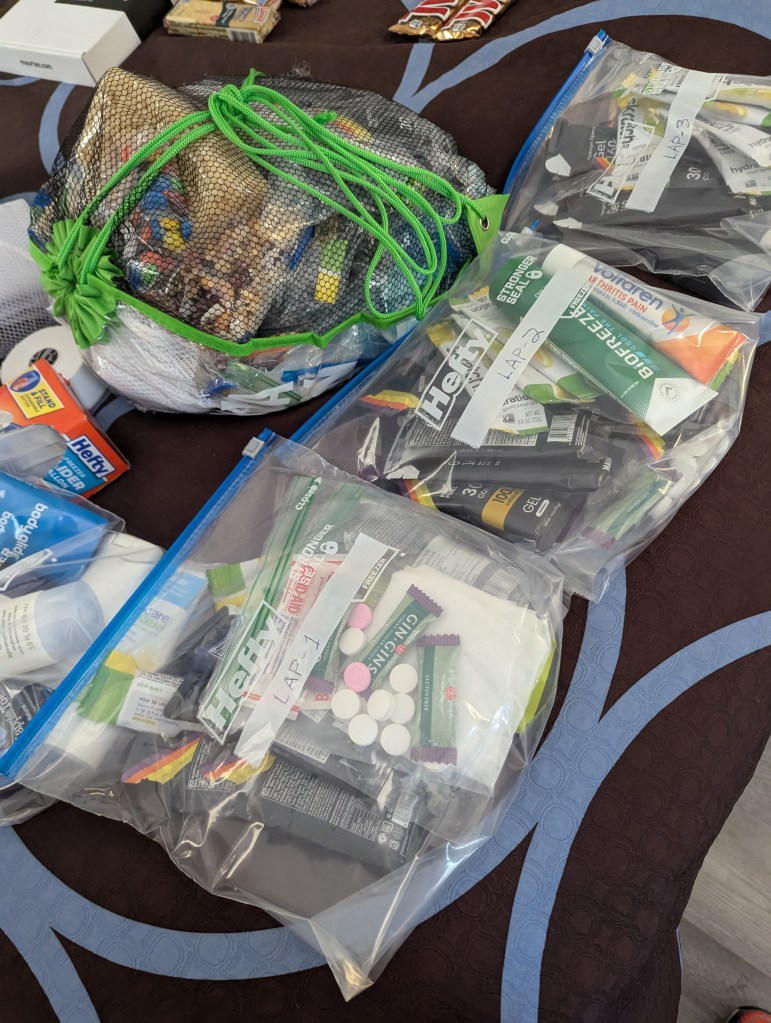
Back in the hotel room, my wife and I made our pre-race preparations. We meticulously planned drop bags containing the researched essentials, including gels, salt tablets, chemically activated ice packs to stay cool, ginger chews to fight nausea, and body lube. After dropping off each bag at the three aid stations, we drove to the starting line. It was now 6:30 a.m., and the temperature had already climbed to 73 degrees. During the warm Texas morning, my brow was already sweating, and the Rocky Raccoon 50-mile race had yet to begin. I met Chris for the first time at our crew blanket, surrounded by far more prepared runners who had full tents and larger teams supporting them. There we were with just a small beach blanket, a cooler filled with ice, and a folding chair for my crew chief. Chris and I shook hands. It was great to meet him in person, and he was incredibly friendly. He had driven four hours the night before to his hotel in Huntsville. Over a series of calls and text messages, Chris had been preparing, and now that we were in person, he was giving me last-minute advice 30 minutes before the race start. “You ran a 4:18 marathon. You can definitely finish this race,” Chris stated matter-of-factly. I was not so sure. The heat was already taking its toll, and I was nervous as hell.
The first lap was hard. Until this race, I had only run on the flat streets of Washington, D.C., and I had virtually no trail running experience. Chris ran the first five miles with me. Under his guidance, I quickly learned the tried-and-true power hike method for the hills, something I had read about many times but had never actually done during a run, let alone a race. The hills immediately took their toll, as did the heat, but the most challenging aspect of this new type of racing was the uneven ground and the tree roots. Oh, the tree roots. The Rocky Raccoon races, both the 50 and 100, are famous for the nearly comically sized pine tree roots stretched out on the trail, ready to trip up fatigued runners. About 10 miles in, I had my first fall. I tripped on a root and fell hard, landing on the ground with the wind immediately knocked out of me. “Holy shit,” I thought. “Ok, my first fall,” I told myself. Part of the game. It must have looked bad because several runners around me stopped to see if I was okay, looking over me with concern. “I’m good!” I yelled. Although stunned, I got up, brushed myself off, and started to run again. I stopped to pee and saw that I was already peeing blood. Not a small amount—my urine was dark red and had a thick consistency. This bloody urine was not from the running; it had been happening already and was a symptom that the cancer had spread to my kidneys. Adding to the complications of a super-abbreviated training block, I was now unable to monitor my hydration because of the blood. My right kidney ached. That was the area the surgeons would soon be inspecting, possibly removing. I put the thought of cancer aside and kept running.
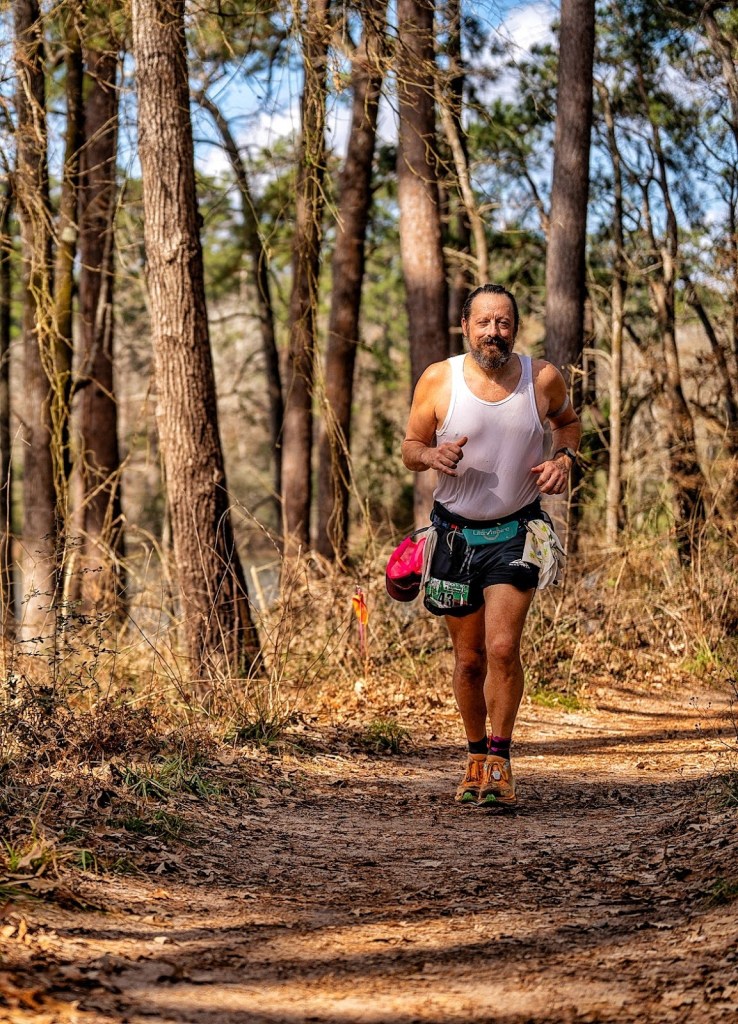
At the end of the first loop, I had run 16.7 miles. During training, 16 miles was something I could do on any given day. I had been running about 50 miles per week, but this was different. The heat, the hills, and the uneven terrain had me feeling utterly spent. “Oh fuck,” I thought. Upon completing the first lap, the prospect of finishing felt impossible. I had promised myself that I would not drop and would push myself as far as humanly possible, given the context, no matter what the consequences. Prior to the race, Chris, who I suspect was feeling concerned that he had helped get me into a situation that could be dangerous, said, “Hey man, if you feel like you are hurting yourself, it’s just not worth it.” With my history of cancer and my new diagnosis, I knew this was my chance to make this happen. My future was so uncertain that I was going to push hard no matter what. I figured, hell, to drop dead during an ultra would be far more badass than passing away drugged up on fentanyl in a hospital bed. I smiled at Chris and said, “I think I am ready to do hard things.” Chris smiled nervously back.
Two more 16.7-mile loops to go.
Lap two was brutal. I had naively told my coach I wanted to suffer, and I got my wish. I kept filling my ice bandana at each aid station, but in the Texas heat, that ice-filled bandana became a soggy wet rag in no time. I fell two more times, each so hard that I didn’t even really catch myself. One moment I was running, and the next I was on the ground. I had consciously decided not to show my mile progress on my Coros running watch. I did not want to do the math and feared that if I was constantly reminded of how much distance remained, such as 40 miles to go, 30 miles to go, or 20 miles to go, I would lose the mental game, which I understood to be key to staying in the race. On the flight to Texas, I was listening to an ultra running audiobook. The author warned about the dangers of doing ultra running math and wisely advised that one important strategy during an ultramarathon was to simply “run the mile that you are in.” Thinking about having to run another 30 miles could have easily broken me. During the second lap, this advice occurred to me and ultimately became my race mantra. I felt a huge blister developing on my right foot from all the sand accumulating in my shoe, but I was too tired to unlace it and empty it out. “Run the mile that you are in,” I thought. My quad muscles began to vibrate and shudder with an unreal amount of pain, and for a moment, I thought, “How on earth can I keep going for another 30 miles?” The mantra came back: “Run the mile you are in.”
By the end of the second lap, I arrived at my crew station, and my wife immediately saw that I was in trouble. She had carefully packed my race vest with gels, trail mix, salt tablets, and hydration powder for my final lap. The prior two laps had been so hot that I chose to run with a belt rather than a vest. She had also prepared a five-gallon ice bucket, and I walked up and dunked my arms in the ice water, attempting to revive myself from the near heat stroke I was experiencing. Due to all the cancer treatments causing me to lose the ability to sweat and regulate my core temperature, 83 degrees might as well have been 120 for me. Chris was there and decided to call it quits at 50K since his main race, the Umstead 100, was coming up. He did not want to compromise his performance. I was a zombie, and while Chris was talking to me and giving me advice, I do not think I heard anything he said. I was struggling to simply stand. From all the ultra literature I had read, I knew it was not a good idea to sit down. By the completion of the second lap, I had officially run an ultramarathon, which starts at a 50K distance, or 31 miles. But my goal was 50 miles, not 31. I ditched many of the gels from my vest, knowing that if I ate one more of those gooey packets, I would be sure to have it come right back up. From this point on, I would stick to water. I managed to give Chris what may have appeared to be a smile, unable to speak, and gave him a fist bump.
The third lap had begun, and I had no idea how I would get through the next 16.7 miles. As we started, several of the 50K finishers clapped as I got back on the course. The race rules allowed for a pacer to accompany a competing runner during the final lap, and my wife joined me as my pacer—really, my savior. She was able to do the ultramarathon math for me and did her best to keep me moving at a pace where I could finish. Prior to the race, our plan had been for me to really turn it on for the last lap, maybe run a 9:30 mile. The thought of running at that pace would have been hilarious if I was not so damn scared. My wife ran ahead, way ahead, and looked back to see me hobbling. “Oh man, I am in trouble,” I thought.
At one point, I sat down to tie my shoe, and an abdominal muscle cramped so badly that the pain was exquisite. I screamed loudly, surprising myself. My wife looked at me, deeply concerned, but I got up and kept going. She already knew the plan: keep me moving at all costs. “Run the mile you are in,” I thought again. Toward the end of the final lap, with four miles to go, I started to believe that I could actually finish, but I did not want to get lulled into a false sense of security. If my pace slowed even slightly or if I had one more bad fall, I could easily miss the cutoff time. As we took a walking break up a steep hill, my wife checked her watch, turned to me, and said, “Okay, we need to pick it up now.” Her tone struck fear deep within me, and the thought of a DNF crossed my mind. It was now or never, I thought. I dug deep and did my best to keep up with my wife. She was jogging at a slow 12-minute mile pace, but for me, it might as well have been a sprint. My legs were utterly raw, and both my feet were bleeding, but for a quick moment, the thought of crossing that finish line gave me goosebumps. Despite the pain, I had a fleeting feeling of giddiness. I smiled through this newly discovered realm of pain.
Prior to the race, I reached out to the Bladder Cancer Advisory Network (BCAN) team and asked about setting up a “DIY fundraising page.” BCAN has been an incredible resource for me throughout my cancer journey. As an avid user of their message board, I received invaluable advice from other bladder cancer patients and did my best to give back to those facing the awfulness and terror of a new cancer diagnosis. I made deep connections with other patients through BCAN’s resources, and some of those connections turned into real-life friendships that felt as if I had known them for a lifetime. I shared the fundraising link with my family and was so thankful to see the donations coming in before the race. Honestly, this also made me nervous. I wanted to do my part and finish this race—not only to support BCAN but to pull off this crazy bucket list goal for myself and to show my family and children what determination and strength look like. In many ways, the cancer community I had discovered felt a lot like the ultra running community. Friendships and deep bonds formed quickly and intensely.
As my wife and I reached the final three miles, we came to a flat, open trail where we could hear the music thumping from the finish area. I could not believe it. “Am I really going to pull this off?” I thought. I was delirious. I was ecstatic. It was fully dark now, and my wife kept the pace while my eyes stayed locked on the reflective strips on the back of her running shoes, brightened by my headlamp. At one point, as my focus was hypnotically locked onto her feet moving down the trail, I saw her step on something. “A snake!” I yelled. She looked back, and we both continued on as if this was a normal occurrence. I told her later that she had stepped on a venomous copperhead. In retrospect, this felt like another symbolic moment—my wife leading me through a dark forest, stomping away threats, driving me to the ER, holding my hand as I woke from a surgery with an average 10 percent mortality rate. This was business as usual for us, so we simply kept pushing forward.
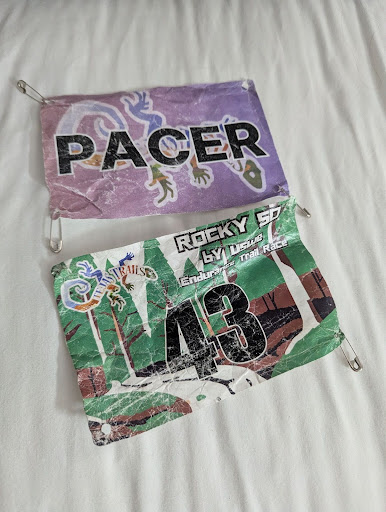
Miraculously, we passed at least eight runners in the last three miles, many of whom were much younger than this 51-year-old man holding on for dear life. We exited the forest and were now running through the parking lot area of the course. As we ran past a very fit-looking couple, I could not help but feel both surprised and proud. The finish line was in sight. This was it, the home stretch. “Holy shit, we are going to do it!” I thought. As we approached the finish line, despite my delirium and sheer exhaustion, I raised my hand, and my wife gave me a high-five. It was 9:00 p.m., and although I was among the last ten or so finishers left on the course, music was blasting, and there were still many people at the finish line cheering loudly. I crossed the finish line and gave the race director a high-five. A kind volunteer reminded me to turn off my run tracking on my watch, and someone handed me the Rocky Raccoon 50-mile finisher medal and placed it around my neck. I just could not believe that I had finished. I was an ultramarathoner. With nothing left in the tank, I walked to our crew blanket and collapsed. My wife, being the superhero that she is, packed up our rental car with the coolers, food, and other race supplies. We picked up the remnants of our drop bags, drove back to the hotel, and it took me a solid five minutes just to get out of the car. I hobbled to our hotel room, fell into the bathtub, and took a long, hot bath.
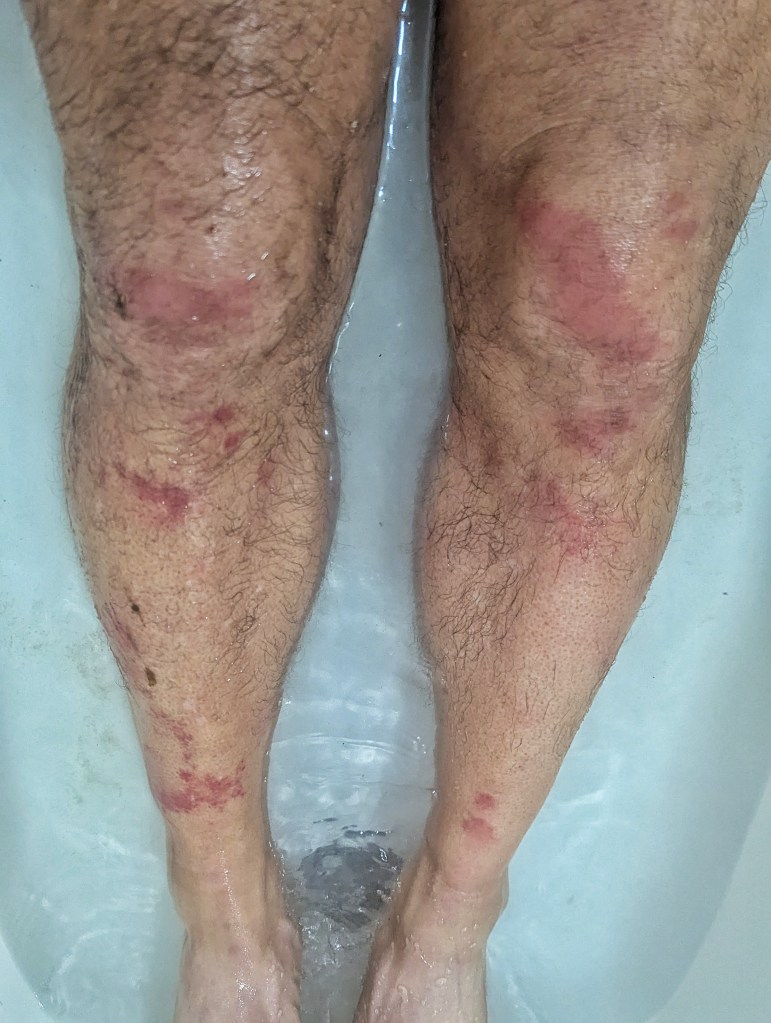
That night, as I lay in the hotel bathtub, I replayed the events of the day. I replayed the last four years of this tumultuous journey. I felt so incredibly thankful for my wife, who had been the rock of our little family, the one who kept me going. She made sure dinners were on the table while I was recuperating from chemo, surgery, and the awful treatments and side effects of cancer. The refrain of “run the mile that you are in” became a profound realization. It was not just what I had been doing during the race; it was what I had been doing throughout my entire cancer journey. It was what my wife was doing every day, coping with the relentless stress of this horrible disease. It was what all my cancer buddies were doing. Despite facing grueling and awful circumstances, each of us was running the mile that we were in. That is all we can do when faced with seemingly insurmountable challenges, and in doing so, we find a way through situations that feel impossible. In the moment, we are simply getting it done. Tears streamed down my face as I lay in the tub with battered and bloody legs, this profound realization washing over me.
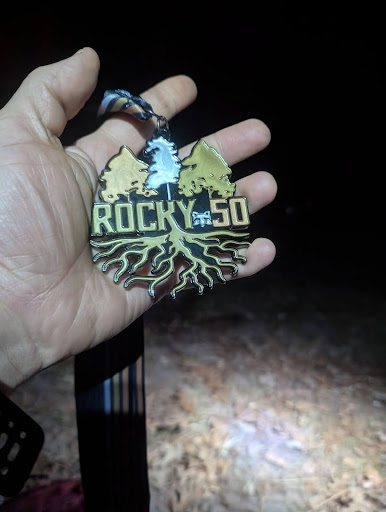
On Sunday, while waiting for our flight back to D.C., I wrote a race report thanking all the people who generously donated to my Bladder Cancer Advocacy Network fundraiser. I thanked them for supporting BCAN and for supporting and believing in me. I wrote about how the race had seemed impossible, how through the heat, the pain, and the seemingly endless miles, I was able to reach the finish line. Knowing that they were in my corner gave me the extra push I needed to keep going when things got dark.
I also felt deeply thankful for this new community I had discovered. The aid station crews who gave me words of encouragement, opened my packet of Skratch electrolyte when my fingers were too swollen to manage it, Chris’ kindness in traveling to Huntsville to meet a complete stranger and race with him, and of course, my wife, who paced me. I know for a fact that if she had not been there, I would not have finished.
As I prepare for my upcoming surgery and whatever else may come, I will remember this mantra, and I will remember the support I have received from the ultra-marathon community and the Bladder Cancer Advocacy Network. And I suggest that when things get hard, when they feel impossible and you simply cannot take another step, you do your best, put one foot in front of the other, and run the mile you are in.
Please consider donating to Vincent’s BCAN fundraising page.
Author:Vincent Rossi, Father, Husband, & Ultramarathoner
 Cancer Cardio Club